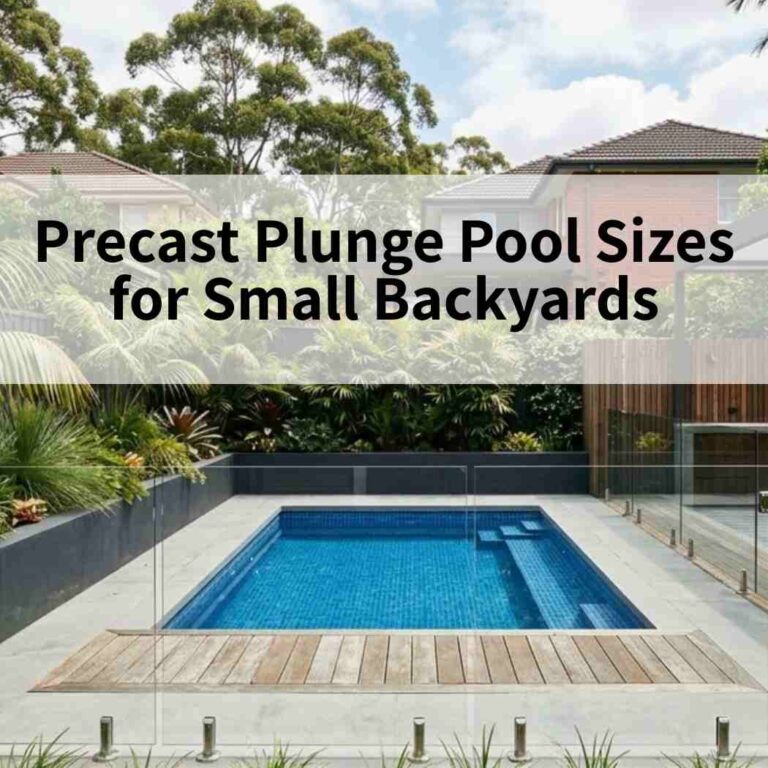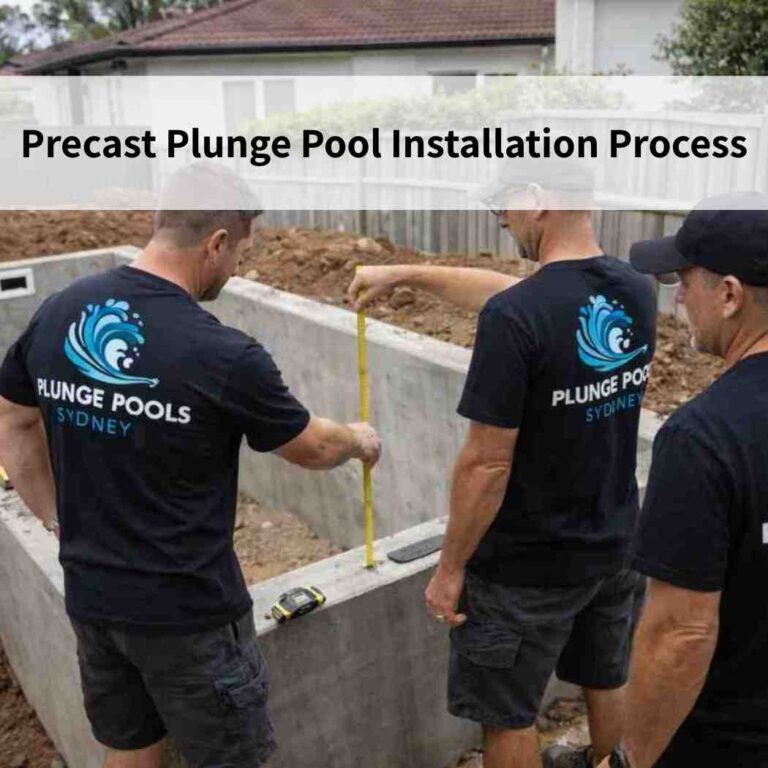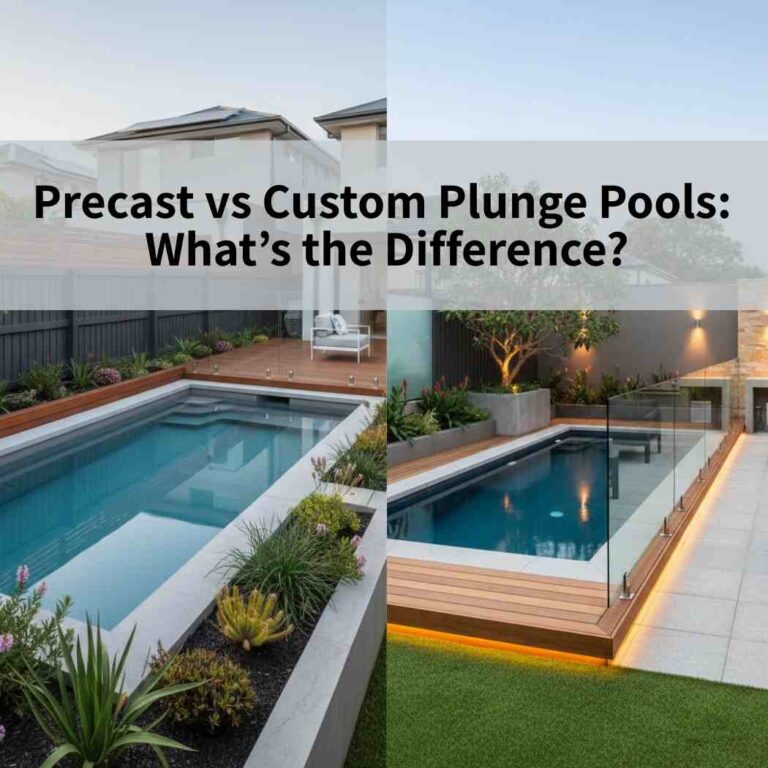
At Plunge Pools Sydney, we design and install precast plunge pools built for local homes, tight blocks, and modern outdoor living. Whether it’s a compact backyard or a luxury Villa, every pool is crafted with Perfection in mind. Our team helps homeowners and Owner-builder clients choose the right size pool that fits both the space and the way they live, creating a true outdoor Retreat.
In this guide, you will learn the exact plunge pool sizes available, how to choose the right one for your backyard, what affects size limits, and how size impacts cost, installation, and long-term use. This will help you make a clear and confident decision before you build.
What Size Are Precast Plunge Pools?
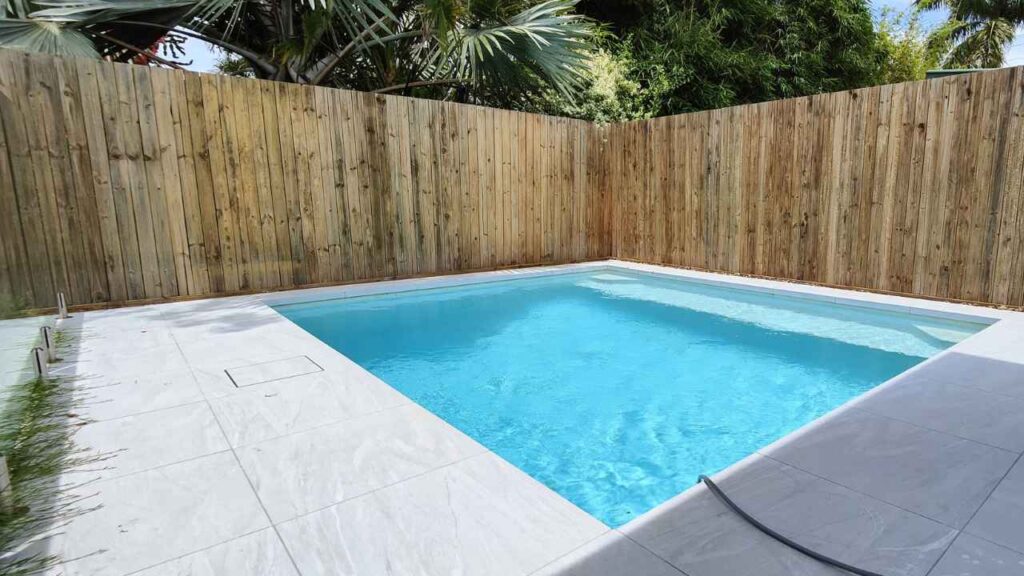
Precast plunge pools typically range from 2m to 6m long, 2m to 3m wide, and 1.2m to 1.5m deep, making them ideal for small backyards, narrow spaces, and compact Australian homes. Each pool shell is engineered as a single structural Element, ensuring strength and long-term durability.
Why are sizes limited?
Precast concrete plunge pools must be manufactured off-site and delivered as a single shell. As a result, size is constrained by real-world logistics, not just design preference.
1. Transport restrictions (delivery limits)
Pools must fit on standard trucks and trailers.
Oversized loads require permits, escorts, and higher costs, which is why most precast plunge pool sizes for small backyards stay within transport-friendly dimensions and maintain the lightest possible weight for safe delivery.
2. Crane lifting capacity (installation limits)
Precast pools are lifted into place using cranes.
The heavier and larger the pool, the bigger the crane required. This affects:
- Site access
- Lift complexity
- Installation cost
This is why small to medium plunge pool sizes (2m to 5m) are the most common choice in suburban areas, especially when coordinated with an experienced Installer.
3. Weight and structural safety (engineering limits)
A larger concrete shell means significantly more weight.
This impacts:
- Crane safety during lifting
- Ground pressure during placement
- Structural requirements for the base
For this reason, standard precast concrete plunge pool dimensions are carefully engineered to balance size, strength, and safety.
Standard Precast Plunge Pool Sizes (Easy Comparison)
| Size | Best For | People | Key Benefit |
| 2.0–2.5m | Small spaces | 1–2 | Low cost, compact |
| 3.0–4.8m | Most homes | 2–4 | Best balance |
| 4.8–6.0m | Families | 4+ | More space |
Ultra-Compact Pools (2.0m – 2.5m)
Best for:
- Courtyards
- Very small backyards
What you get:
- Fits 1–2 people
- Low cost and maintenance
- Great for cooling off
Small to Medium Pools (3.0m – 4.8m)
Best for:
- Most Sydney homes
- Couples and small families
What you get:
- Fits 2–4 people
- Space to relax and socialise
- Best balance of cost and usability
Large Plunge Pools (4.8m – 6.0m)
Best for:
- Families
- Entertaining
What you get:
- Fits 4+ people
- More movement space
- Higher cost and space needed
Which Pool Shape Works Best?
Rectangular plunge pools are the most practical for small backyards.
- Maximise usable space
- Better for movement
- Fit narrow blocks well
Other options:
- Round → best for soaking
- Square → compact and balanced
Precast vs Custom Pools (Key Difference)
Precast pools are faster and cheaper and often arrive ready to install, while custom pools offer more flexibility but cost more and take longer.
| Feature | Precast | Custom |
| Size | Fixed | Any size |
| Cost | Lower | Higher |
| Time | Days | Weeks–months |
| Flexibility | Limited | Full |
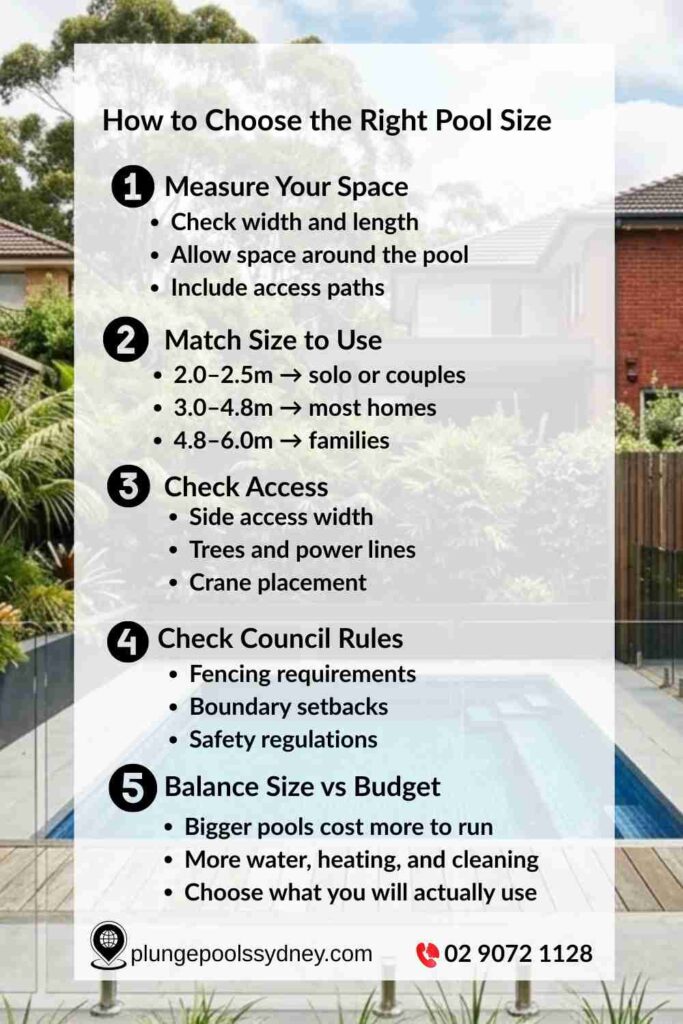
How to Choose the Right Pool Size
The right pool size depends on your available space, how you plan to use the pool, site access for installation, local council rules, and your budget. Most homeowners work closely with a professional pool builder to choose between 2m and 5m plunge pools because they balance space, cost, and usability.
How Much Space Do You Need Around a Plunge Pool?
You need at least 500mm to 1,000mm of space around a plunge pool.
Why this matters:
- Safety and fencing compliance
- Maintenance access
- Comfortable movement
Example:
- Pool: 3.5m
- Clearance: 0.75m each side
- Total space needed: ~5.0m
Real Examples of Plunge Pool Sizes
Common sizes used in Sydney:
2.5m x 2.5m
- 1–2 people
- ~6,000–8,000L
- Best for small spaces
3.5m x 2.5m
- 2–4 people
- ~10,000–13,000L
- Balanced size
4.5m x 2.5m
- 3–5 people
- ~14,000–18,000L
- More versatile
6.0m x 3.0m
- 4+ people
- ~22,000–27,000L
- Closest to a full pool
Pool Size vs Backyard Size
| Backyard Size | Pool Size | Outcome |
| <30m² | 2.0–2.5m | Compact, low cost |
| 30–60m² | 2.5–3.5m | Balanced |
| 60–120m² | 3.5–4.8m | Most practical |
| 120m²+ | 4.8–6.0m | More space |
Installation Types and Size Limits
Above-Ground
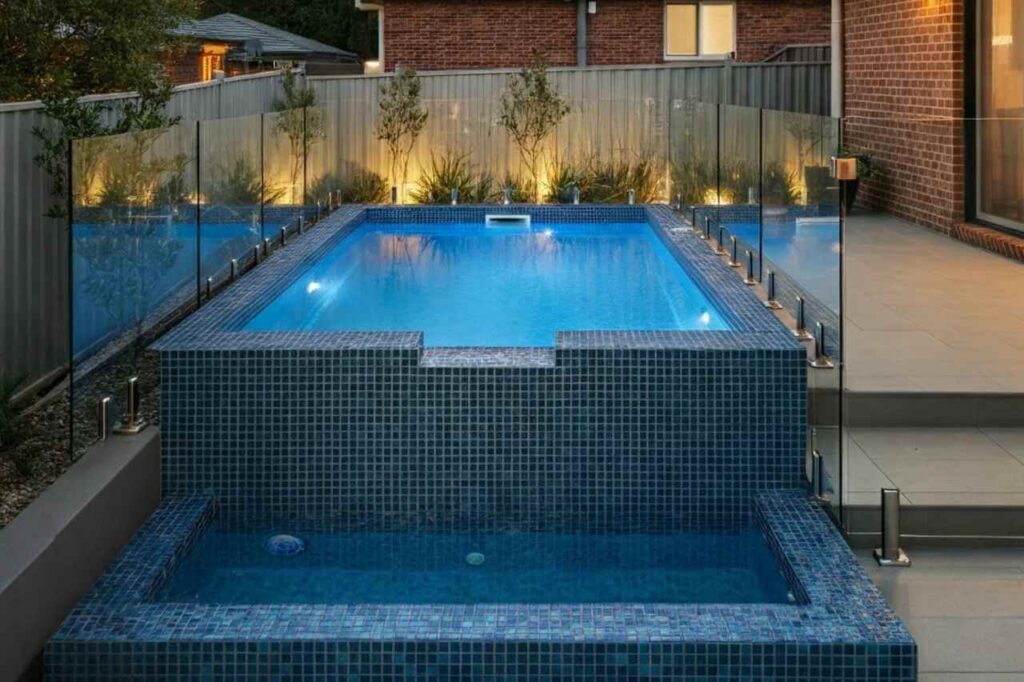
- Easier install
- Works on slopes
- Allows larger sizes
Semi-Recessed
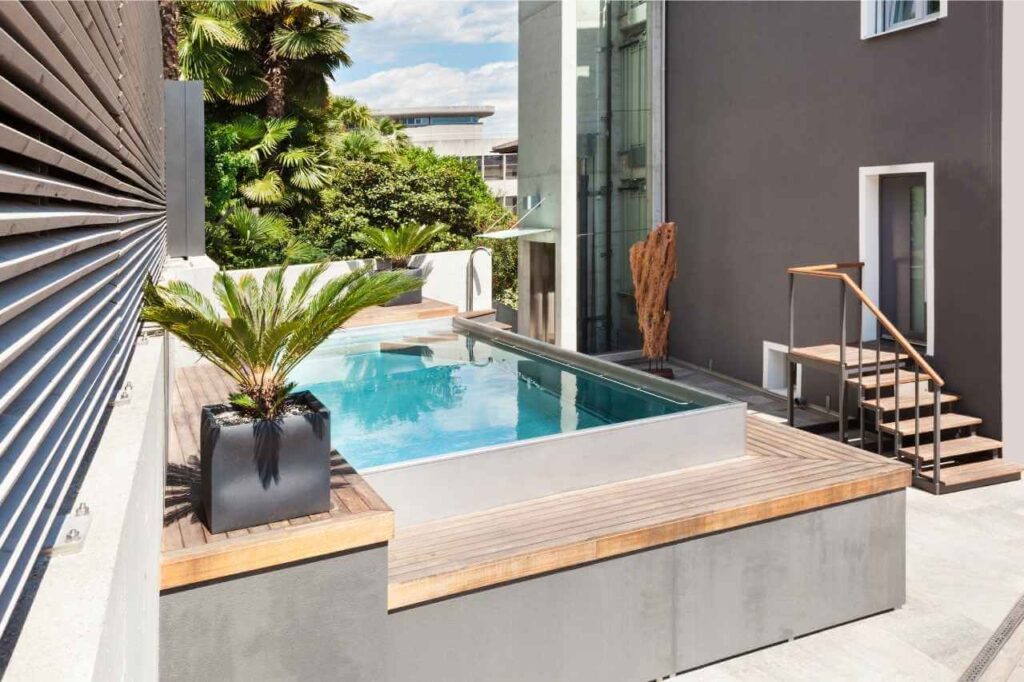
- Good for uneven blocks
- Moderate flexibility
In-Ground
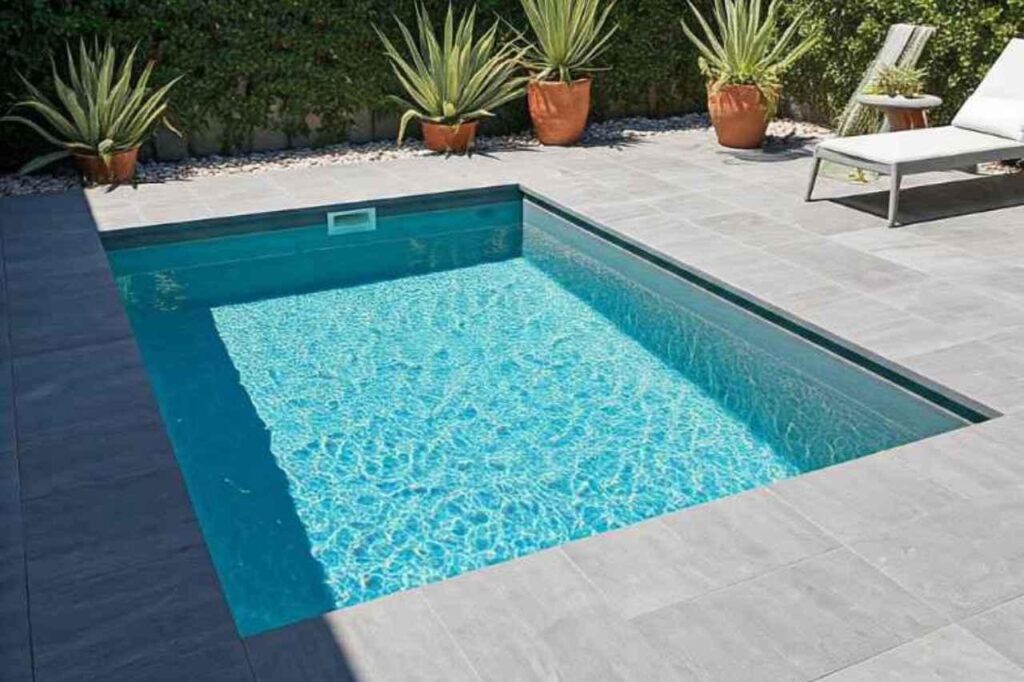
- Clean look
- More excavation
- May limit size
How Much Do Plunge Pools Cost? (Sydney 2026)
Precast plunge pools typically cost between $25,000 and $90,000+, depending on size and site conditions.
| Size | Cost Range | Value |
| 2.0–2.5m | $25K–$40K | Higher cost per metre |
| 3.0–4.8m | $35K–$60K | Best value |
| 4.8–6.0m | $55K–$90K+ | Higher total cost |
Ongoing Costs
Bigger pools cost more to run:
- More heating
- More cleaning
- More chemicals
Pros and Cons by Pool Size
Small Pools
Pros:
- Low cost
- Fits tight spaces
Cons:
- Limited movement
Medium Pools
Pros:
- Best balance
- Fits most homes
Cons:
- Not ideal for large groups
Large Pools
Pros:
- More space
- Better for families
Cons:
- Higher cost
- More maintenance
What Are the Most Common Mistakes When Choosing a Plunge Pool?
The most common mistakes when choosing a plunge pool are focusing on appearance instead of use, ignoring site access for installation, choosing a pool that is too large for the space, and underestimating ongoing running costs.
1. Choosing Based on Looks, Not Use
A plunge pool might look perfect in photos, but that does not mean it suits your lifestyle.
Common issue:
- Picking a design that looks good but is too small, too deep, or not practical
Better approach:
- Think about how you will use it
(cooling off, relaxing, entertaining, or light swimming) Choose function first, then design.
2. Ignoring Access Limitations
Many homeowners forget that plunge pools must be delivered and installed.
Problems this causes:
- The pool cannot fit through the side access
- Crane access is blocked by trees or power lines
- Higher installation costs or delays
Reality:
Precast plunge pools are heavy and require clear access for safe installation.
Tip:
Always check access before choosing your pool size.
3. Oversizing a Small Backyard
Bigger is not always better, especially in compact spaces.
What happens when you go too big:
- No room for seating or landscaping
- Tight walkways and poor flow
- The backyard feels crowded and unusable
Better approach:
- Leave space around the pool for:
- Fencing (required by law)
- Movement and furniture
- Visual balance
Simple truth:
A smaller, well-placed plunge pool often looks and feels better.
4. Forgetting Ongoing Costs
The upfront cost is only part of the picture.
Ongoing costs include:
- Water usage
- Heating
- Cleaning and chemicals
- Maintenance
Larger pools:
- Cost more to run
- Take longer to heat
- Require more upkeep
Smaller plunge pools:
- More energy-efficient
- Lower maintenance
- Faster to heat
The biggest mistake is choosing a plunge pool based on appearance instead of practicality.
The best plunge pool size and design should match:
- Your space
- Your lifestyle
- Your access conditions
- Your budget
Design Tips to Make a Small Pool Feel Bigger
- Use light colours
- Keep edges clean and simple
- Add built-in seating
- Use consistent decking
Who Should Choose Each Size?
- 2.0–2.5m → singles, couples
- 3.0–4.8m → most households
- 4.8–6.0m → families, entertaining
Is a Bigger Pool Always Better?
No. The best pool size is the one that fits your space, budget, and lifestyle. Bigger pools are not always better, especially for small backyards where space, access, and running costs matter.
Why Bigger Pools Are Not Always Better
A larger pool may seem like a better investment, but it comes with trade-offs.
Bigger plunge pools:
- Costs more to install (materials, excavation, crane size)
- Take up more backyard space
- Increase running costs (heating, cleaning, chemicals)
- Require more maintenance over time
In many suburban homes, a large pool can dominate the yard and reduce usable outdoor space.
Why Smaller Plunge Pools Are Often the Smarter Choice
Smaller pools are designed for modern backyards and practical use.
Smaller plunge pools:
- Easier to manage and maintain
- Faster and cheaper to heat
- Fit better in tight or narrow spaces
- Leave room for entertaining areas, decking, and landscaping
They are ideal for:
- Cooling off in summer
- Relaxing and unwinding
- Compact urban backyards
What Actually Matters When Choosing Pool Size
Instead of going bigger, focus on what fits your needs:
- Space: Does it fit comfortably with fencing and walkways?
- Use: Will you relax, entertain, or swim laps?
- Access: Can it be delivered and installed easily?
- Budget: Can you afford both installation and long-term costs?
Simple rule:
Choose a pool you will use often, not one that just looks impressive.
Conclusion
Precast plunge pool sizes for small backyards in Sydney typically range from 2.0m to 6.0m in length, 2.0m to 3.0m in width, and 1.2m to 1.5m in depth. The right size depends on your space, access, budget, and how you plan to use the pool.
If you want to get it right the first time, it helps to work with experts who understand local conditions.
At Plunge Pools Sydney, we help homeowners choose, deliver, and install precast plunge pools that fit real Sydney backyards. If you are planning a pool, contact our team to determine the best size for your space and get started with confidence.
FAQs
1. Will a precast plunge pool fit in my small backyard?
Yes, a precast plunge pool can fit in most small backyards in Sydney. Sizes start from around 2.0m. What matters is usable space, access, and clearance. Even narrow or tight blocks can work with the right size and layout.
2. What is the best plunge pool size for most Sydney homes?
The best plunge pool size for most Sydney homes is 3.0m to 4.8m. This range gives enough space to relax, sit, and socialise. It balances comfort, cost, and fit, making it the most practical choice for everyday use.
3. How much space do I need around a plunge pool?
You need at least 500mm to 1,000mm of space around a plunge pool. This allows safe access, maintenance, and compliance with fencing rules. Without this space, the pool becomes difficult to use and maintain.
4. How much does a precast plunge pool cost in Sydney?
A precast plunge pool in Sydney typically costs $25,000 to $90,000+. The price depends on size, site conditions, and installation type. Smaller pools cost less upfront, while larger pools increase both installation and long-term running costs.
5. How do I know what size plunge pool is right for me?
The right plunge pool size depends on your space, access, and how you will use it. Measure your usable area, match the size to your needs, and consider your budget. The best choice is balanced, not simply the biggest option available.