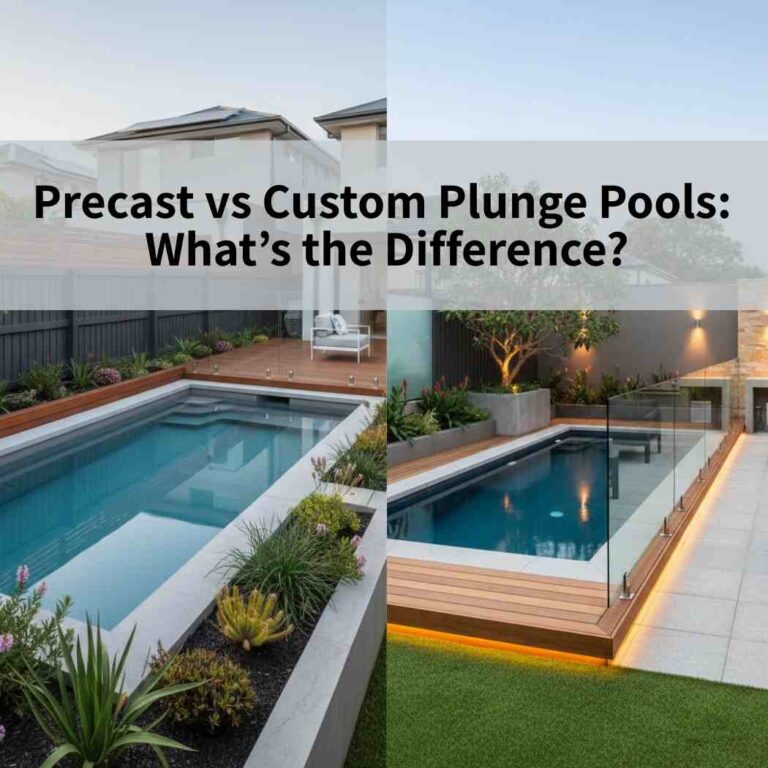
At Plunge Pools Sydney, this is a question we answer every week for homeowners trying to choose the right pool for their home. The decision isn’t just about price or appearance; it’s about site access, approvals, engineering, and how the pool will perform long after installation, especially when you want your pool to suit both your lifestyle and your block.
In this article, you’ll learn what the difference is between the two construction methods, how each installation process works in practice, and what matters most when you want to make an informed choice for your backyard, budget, and long-term ownership.
What Is the Difference Between Precast and Custom Plunge Pools?
The difference in choosing between a precast plunge pool and a custom option usually comes down to how the pool fits your outdoor space, how fast it can be delivered, and how much control you want over the outcome. Some homeowners prioritise a quick installation so they can start swimming sooner, while others care more about flexibility in design, long-term regular upkeep, and how the pool integrates with their Landscape.
A precast plunge pool is manufactured off-site in a factory under controlled conditions, then delivered and installed on-site. A custom plunge pool is built entirely on your property from excavation through to curing, resulting in a fully bespoke custom concrete structure with full freedom over shape and size.
| Feature | Precast Pool | Custom Pool |
|---|---|---|
| Built | In a factory | On your site |
| Time | 4 to 6 weeks, mainly planning | 6 to 10 weeks, mostly building |
| Cost | Fixed early | Variable until finished |
| Risk | Low due to factory control | Higher due to weather and trades |
| Design freedom | Moderate | Very high |
| Ideal for | Tight or sloping Sydney blocks | Sites with full access |
Precast pools trade some design freedom for speed, certainty, and lower risk; custom pools trade time and predictability for total design control, particularly where design complexity is high or where pools so you can make highly specific design requests.
How Each Pool Is Actually Built
Custom and precast plunge pools behave differently because they are built in completely different environments.
A precast plunge pool is manufactured indoors under controlled conditions, while a custom plunge pool is constructed outdoors on your site. That single change in environment directly affects concrete strength, build quality, timelines, and risk.
How a Precast Plunge Pool Is Made
A precast concrete plunge pool is built end-to-end in a factory before it ever reaches your property.
The typical precast construction process:
- Steel mould fabricated to a fixed, engineered size
- High-strength concrete poured under stable factory conditions
- Even curing using controlled temperature and moisture
- Structural strength tested and signed off by engineers
- The pool shell was transported to the site and craned into position in one lift, requiring crane hire and careful planning for using a crane
Because curing happens indoors, the concrete reaches its designed strength without exposure to rain, heat swings, or wind. This results in a monolithic concrete shell with predictable performance.
By the time a precast plunge pool arrives at your home, it is already cured, structurally certified, and ready for installation. On-site work focuses on base preparation, placement, connections, and compliance, not building the shell itself, which shortens overall installation time.
How a Custom Plunge Pool Is Built
A custom pool is built outdoors on your property.
- Excavation and formwork
- Steel reinforcement tied on site
- Concrete poured or sprayed, including pouring concrete under variable conditions
- Shell cured in open weather
- Finishes and waterproofing added
Every step depends on the last. Rain, wind, or missed trade slots can all slow the job or affect quality, particularly for a custom concrete pool built on a residential site with limited access.
In simple terms:
Factory curing gives repeatable quality.
Site curing gives flexibility but more risk.
The Real Difference in Simple Terms
- Factory curing delivers repeatable strength, consistency, and low risk.
- Site curing delivers design flexibility, but with higher exposure to delays and variability.
That’s why precast plunge pools are often chosen for urban Sydney backyards, narrow lots, and projects where certainty matters, while custom pools are better suited to open sites where design freedom outweighs time and risk considerations.
Why the Build Method Matters
Sydney weather, soil conditions, and site access can change everything.
Precast pools may reduce delays because the concrete shell is fully built and cured before it ever reaches your property. Custom plunge pools remain exposed to weather and trade timing until the very end of construction.
- Precast pools reduce delays because the shell is complete before delivery.
- Custom pools stay exposed to weather and trade timing until finished.
That’s why installation day looks faster for precast pools; the hard work happens earlier, in planning and approvals, resulting in quick installation on site.
How Long Does Each Take?
A “one-day install” refers to the crane lift, not the full project.
Both precast and custom plunge pools require site checks, engineering, and approvals before anything happens on your block. The difference is where the long part of the build takes place in the overall installation process.
| Step | Precast Pool | Custom Pool |
|---|---|---|
| Site check and engineering | 1 to 2 weeks | 1 to 2 weeks |
| Council or certifier approval | 2 to 3 weeks | 2 to 3 weeks |
| Shell build | In a factory off site | 3 to 6 weeks on site |
| Installation | 1 day | Not applicable |
| Total time | About 4 to 6 weeks | 6 to 10 weeks plus weather |
Precast feels faster because the visible work is short.
Custom feels slower because building and curing happen at your place.
Cost Comparison: What You’re Really Paying For
The price difference between a custom plunge pool and a precast plunge pool isn’t just about size or finishes.
It comes down to how predictable the build is, how much work happens on-site, and how many variables can still change once construction starts, including access constraints that affect quicker installation.
Typical Sydney Price Range
| Pool type | Average installed cost |
|---|---|
| Precast plunge pool | $35,000 to $55,000 |
| Custom plunge pool | $45,000 to $70,000+ |
These figures vary depending on size and additional features, site access, and engineering requirements, but they reflect real-world Sydney projects.
Custom pools often carry a higher price tag because excavation time, labour sequencing, and curing conditions can’t be locked in early. On-site builds also involve higher labour costs due to longer construction timelines and trade coordination.
Why Precast Costs Are More Predictable
You pay for:
- Factory-built shell and certification
- Engineering done upfront
- Transport and crane installation
- Base prep and compliance
Because the shell is standardised, labour time and materials are fixed.
Why Custom Costs Change
You pay for:
- Excavation and spoil removal
- On-site steel and concrete work
- Weather-dependent curing
- Multiple trades in sequence
If it rains or the soil changes, time and costs shift as well.
Hidden Costs Homeowners Miss
- Engineering upgrades for reactive clay or slope
- Retaining walls or drainage
- Access prep for cranes or machinery
- Council and certifier fees
Tip: The cheapest pool to install isn’t always the cheapest to own.
Consistent concrete strength means fewer long-term repairs.
Design Freedom vs Standardisation: What You Can and Can’t Change
The biggest trade-off between custom and precast plunge pools is shape freedom versus structural certainty. Aesthetics play a major role in choosing between options, as homeowners often want a pool that complements landscaping and personal style.
Custom pools allow full customisation options, including integrated spas, curved walls, and infinity edges. Precast pools work within standard shapes that are pre-engineered for strength and consistency.
A custom pool can even be designed as a lap pool, but this typically requires more excavation, engineering, and curing time than a precast alternative.
What You Can Customise in a Precast Pool
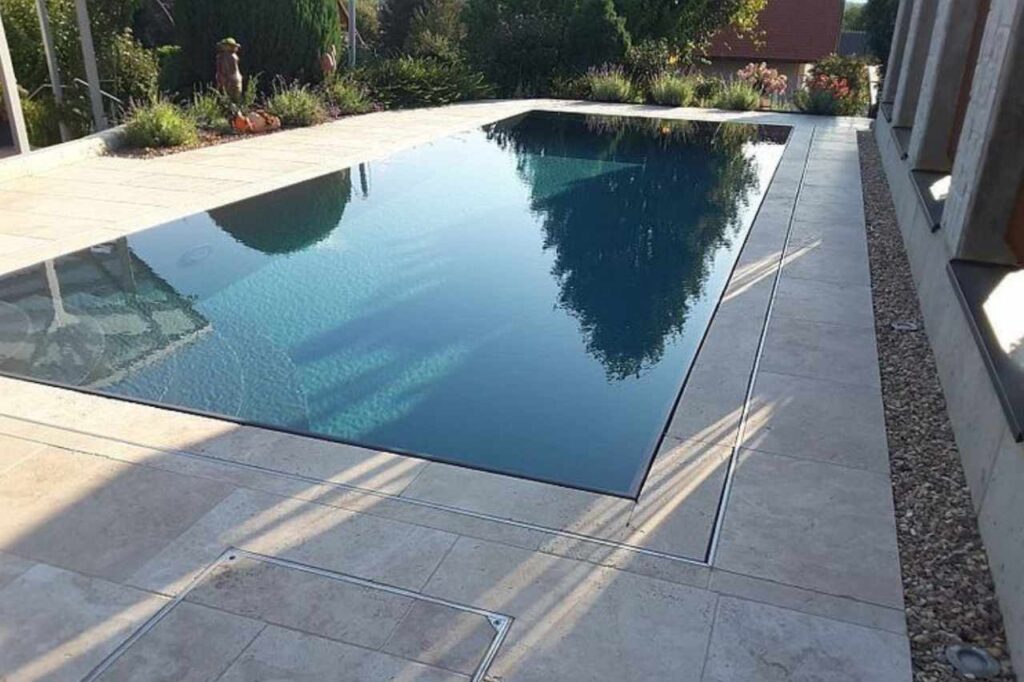
- Choose from standard sizes and shapes
- Pick tile or render finishes
- Add lights, heating, or jets
- Select coping and surroundings
Shape changes are limited because the mould and stress patterns are pre-engineered.
What You Can Customise in a Custom Pool
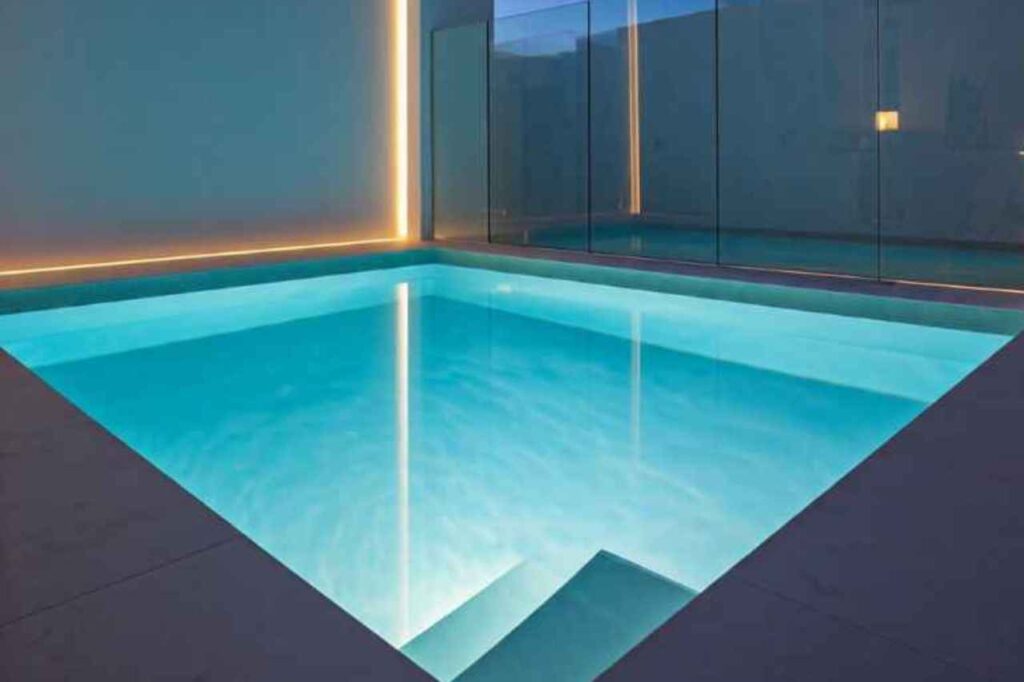
- Any shape or depth
- Integrated spa or water feature
- Special edges (infinity, wet edge, etc.)
Freedom brings complexity; each change needs new engineering and adds time on site.
Simple rule:
Precast = predictability.
Custom = creativity.
How Do Site Access, Block Type, and Soil Conditions Affect Your Pool Choice?
In Sydney, block conditions often decide the pool before the homeowner does.
Precast pools are commonly selected for sloping blocks where site access is tight, but crane placement is possible. Custom pools suit sites with clear access but complex shapes or obstacles that prevent crane lifts.
Precast Pools Work Best When
- A crane can reach the site
- There’s clear overhead space
- The block is narrow or steep but stable
Custom Pools Work Best When
- Crane access is blocked
- Trees or powerlines can’t move
- You have room for excavation gear
Soil Testing Matters
Sydney soils range from reactive clay to sandstone.
Precast pools rely on base accuracy.
Custom pools rely on on-site curing quality.
Engineering each correctly stops cracking later.
How Do Structural Performance, Durability, and Long-Term Risk Compare Between Pool Types?
Concrete strength comes from curing.
Precast plunge pools are cured indoors for even, predictable strength. Custom plunge pools are cured outdoors, where strength can vary with weather and site conditions. Both can last decades when engineered and built correctlybut they don’t carry the same level of risk.
- Precast: cured indoors, even strength
- Custom: cured outdoors, strength varies
Both can last decades if built to plan.
Common Cracking Causes
- Uneven curing
- Ground movement
- Poor load distribution
Precast shells reduce these risks by curing before installation.
Custom shells depend more on weather and workmanship.
How Do Maintenance, Finishes, and Lifetime Ownership Costs Compare Between Pool Types?
The real cost of a plunge pool is paid after installation, not on delivery day.
Smooth, consistent shells reduce brushing and chemical demand, lowering maintenance compared to requirements and ongoing upkeep, including reduced algae growth.
Finishes and Surface Care
| Finish | Precast result | Custom result |
|---|---|---|
| Pebblecrete or tile | Even less cracking | May vary by curing |
| Polished concrete | Smooth finish with lower chemical use | Depends on the weather |
| Rendered | Stable base | Risk of micro cracks |
Chemical and Cleaning Needs
Smooth, even shells (like precast) use:
- Less chlorine
- Less brushing
- Fewer algae issues
Custom pools can match this with careful curing and finishing.
Lifetime Costs
Both need re-grouting or resealing over time, but precast cycles are more predictable.
What Does Compliance, Safety, and Legal Swim Approval Actually Mean for a Plunge Pool?
A plunge pool is not legally usable until it is compliant, even if construction is finished.
In NSW, you cannot swim until the swimming pool passes final inspection and a compliance certificate is issued
Swim-Ready Checklist
☑ Approved plans and engineering
☑ Fence installed to Australian Standards AS 1926
☑ Self-closing, self-latching gate
☑ Final inspection passed
☑ Compliance certificate issued
Precast pools: most engineering done early, fewer stage inspections.
Custom pools: more inspections during build.
Either way, fencing mistakes are the most common cause of delays.
How Do Environmental and Energy Considerations Differ Between Plunge Pool Types?
A plunge pool may be small, but its environmental footprint depends on how it’s built and how it’s operated over time.
Construction method affects water efficiency, energy use, and on-site impact just as much as pool size does.
Precast plunge pools minimise site disruption and integrate more easily with the surrounding Landscape, while custom builds allow greater control over material sourcing.
Water Use and Efficiency
Both precast and custom plunge pools hold similar volumes of water when built to the same size. The difference shows up over time.
- Precast plunge pools are factory-cured, producing dense, uniform concrete. This reduces micro-porosity and lowers the risk of long-term seepage.
- Custom plunge pools can perform just as well, but water tightness depends more heavily on on-site curing quality and waterproofing execution.
Over years of ownership, better shell consistency means less topping up and fewer water losses, especially in Sydney’s hot summers.
Energy Use and Heating Performance
Plunge pools are inherently more energy-efficient than larger pools because of their smaller water volume.
For both pool types:
- Heat pumps offer the best long-term energy efficiency
- Solar heating can reduce running costs where roof space allows
- Gas heaters provide rapid heating, but have higher ongoing energy use
Because plunge pools heat faster, energy demand per swim is lower, regardless of whether the shell is precast or custom. The biggest energy savings come from good insulation, pool covers, and efficient equipment, not from the pool type alone.
On-Site Environmental Impact
Precast Plunge Pools
- Shorter on-site construction time
- Less noise, dust, and waste
- Fewer concrete pours and less site runoff
Most environmental impact is shifted off-site to the factory, reducing disruption to neighbours and surrounding properties.
Custom Plunge Pools
- Longer on-site activity
- More excavation spoil and formwork waste
- Greater flexibility in sourcing materials locally
Custom builds can be environmentally responsible, but they typically involve more prolonged site disturbance.
The Sustainability Takeaway
From an environmental and energy perspective:
- Precast plunge pools minimise on-site impact and reduce long-term water loss through consistent concrete quality.
- Custom plunge pools offer flexibility but rely more on on-site execution to match that efficiency.
In both cases, the biggest gains come after installation through efficient heating systems, covers, smart water management, and proper maintenance.
How Do Resale Value and Buyer Perception Differ Between Precast and Custom Pools?
A plunge pool can increase buyer appeal or raise buyer concern, depending on how it was built and approved.
At resale, buyers care less about how the pool was installed and more about risk, documentation, and compliance.
| Buyer view | Precast pool | Custom pool |
|---|---|---|
| Quality proof | Engineering certificate | Builder records |
| Documentation | Clear and standard | Varies |
| Perceived risk | Low | Moderate |
| Appeal | Consistent | Design driven |
Buyers ask: “Is it certified and approved?”
Paperwork builds trust — no matter the style.
What Can Go Wrong With Each Plunge Pool Option? A Risk Comparison
Every plunge pool carries risk. The difference is where that risk sits and how much control you have over it.
Precast and custom plunge pools fail for different reasons, at different stages of the project.
Risk Comparison at a Glance
| Risk type | Precast pool | Custom pool |
|---|---|---|
| Weather delay | Low | High |
| Cost blowout | Low | Medium to high |
| Access failure | Moderate | Low |
| Workmanship variation | Low | High |
| Approval complexity | Low | High |
The Risk Takeaway
- Precast plunge pools concentrate risk upfront, then deliver a short, controlled installation
- Custom plunge pools offer flexibility, but carry ongoing exposure until the final inspection
In short, risk doesn’t disappear; it moves. The best pool choice is the one whose risk profile matches your site, timeline, and tolerance for uncertainty.
What Are the Most Common Myths About Custom vs Precast Plunge Pools?
Marketing labels create myths. The build process determines results.
Many assumptions about custom and precast plunge pools don’t hold up once you understand how concrete, curing, and approvals actually work.
Myth 1: Custom Pools Are Always Better
Truth: Quality depends on engineering, curing, and workmanship, not whether a pool is custom. A well-engineered precast plunge pool can outperform a poorly managed custom build. “Custom” describes design freedom, not automatic quality.
Myth 2: Precast Pools Are Weaker
Truth: Factory curing often produces stronger, more consistent concrete. Controlled temperature and moisture allow concrete to reach its designed strength evenly, reducing internal stress and long-term cracking risk.
Myth 3: Fast Installation Means Shortcuts
Truth: Speed comes from planning, not cutting corners. Precast pools install quickly because approvals, engineering, and curing are done before delivery. The work is shifted earlier, not skipped.
Myth 4: Precast Pools Hurt Resale Value
Truth: Certified, compliant pools hold value because buyers trust documented quality. Clear engineering certificates and approvals often make precast pools feel lower risk during resale inspections.
Labels don’t build pools; process does.
When you understand how each pool is engineered, cured, installed, and approved, the myths fall away. In plunge pools, understanding the build method matters far more than believing the category name.
Final Summary: Making the Right Choice With Confidence
Custom plunge pools offer more design freedom but rely heavily on site conditions and workmanship. Precast plunge pools reduce risk by moving construction off-site and locking in decisions early. For Sydney homeowners, success comes from good planning, proper approvals, sound engineering, and experienced installation.
At Plunge Pools Sydney, we help homeowners choose the right solution for their block, not the most popular one. If you’re considering a plunge pool and want clear advice based on Sydney conditions, councils, and Australian Standards, speak with our team before making a decision.
A short conversation early can prevent months of stress later.
FAQs
1. Which plunge pool option is better for my specific Sydney block?
The best plunge pool depends on your site, not the pool type. Precast pools suit narrow or sloping Sydney blocks where certainty matters. Custom pools suit sites needing special shapes or no crane access. A site assessment decides this, not brochures.
2. Can a precast plunge pool be installed on my property, or will access stop it?
A precast plunge pool can be installed if safe crane access is possible. This includes clear overhead space, street access, and a stable placement zone. Power lines, trees, or tight streets can limit access, which must be checked before ordering the pool.
3. What is the real total cost once approvals, engineering, and site work are included?
The real cost includes more than the pool shell. You must allow for engineering, council or certifier fees, base preparation, fencing, drainage, and access works. In Sydney, ignoring these items is the main cause of budget blowouts.
4. How long does the full process take from approval to swimming?
Most plunge pool projects take several weeks, not days. Precast pools install quickly, but approvals, engineering, and site prep happen first. Custom pools are built on-site and take longer due to curing and weather. Swimming is allowed only after final certification.
5. Who is responsible for approvals, engineering, and final certification?
Responsibility depends on your installer’s service scope. Some installers manage approvals, engineering, and certification end-to-end. Others leave this to the homeowner. Always confirm this early, because missing paperwork is a common cause of delays and compliance issues.